Introduction
What Is Biodiversity?
Biodiversity is the variety of all living things found within an ecosystem. It includes the many different species of plants, animals, and other organisms that share a habitat, as well as the differences in genes within a single species. High biodiversity makes ecosystems stronger and more stable. It keeps food chains balanced, supports clean water and clean air, and allows ecosystems to recover from damage. When biodiversity declines, ecosystems become fragile. Losing even one species can cause problems for all the other species that depend on it.
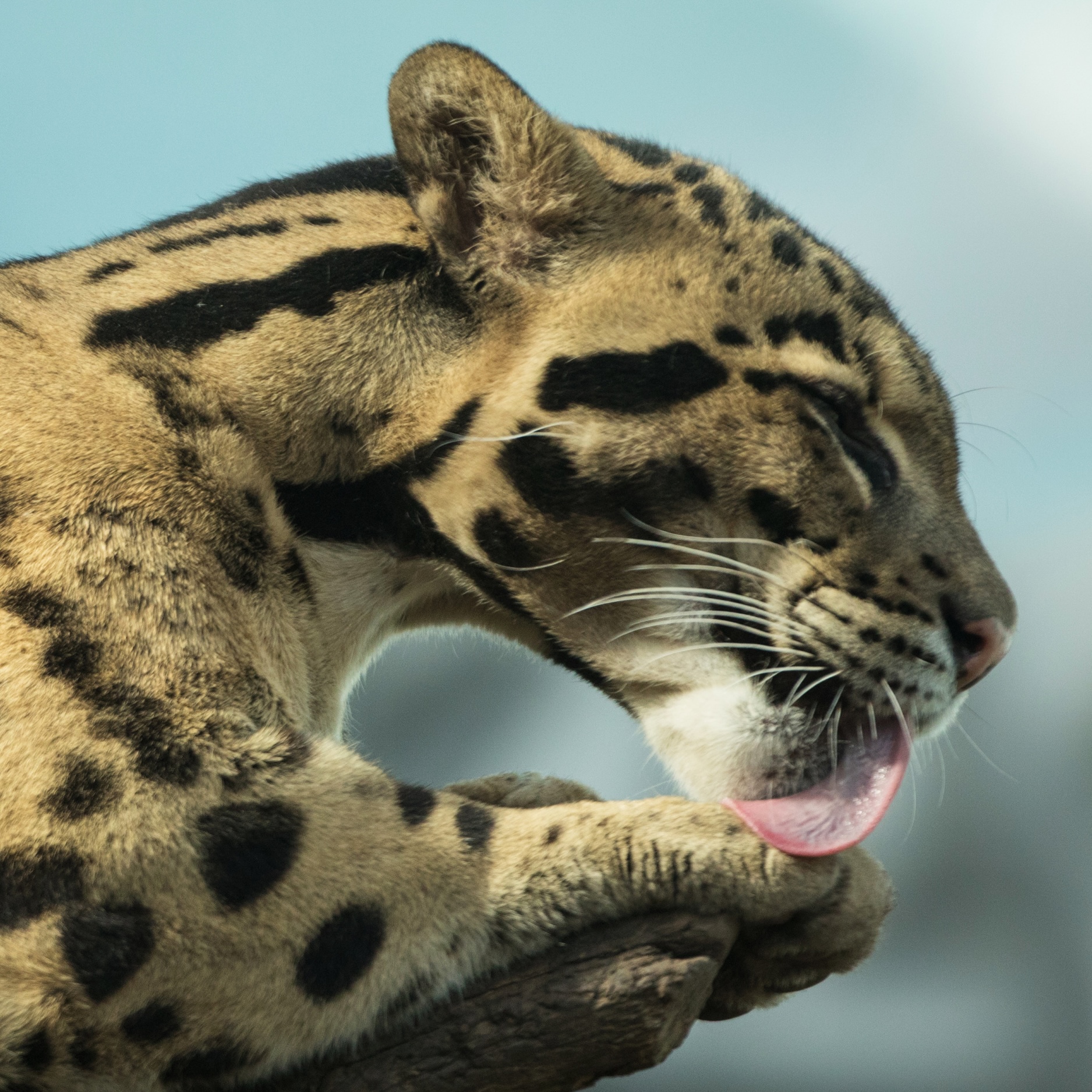 Clouded leopard (Neofelis nebulosa) in its natural
canopy habitat.
Clouded leopard (Neofelis nebulosa) in its natural
canopy habitat.
Meet the Clouded Leopard
The clouded leopard (Neofelis nebulosa) is a medium-sized wild cat that lives in the thick tropical and subtropical forests of Southeast Asia. It is named after the large, cloud-shaped markings on its coat. It is the smallest of the so-called "big cats" and one of the hardest to spot in the wild. Adults weigh between 11 and 23 kg (roughly 25 to 50 lbs) and measure about 70 to 105 cm in body length, with a tail nearly as long as their body.
Clouded leopards are outstanding climbers. Their back ankles can rotate backward, which allows them to descend trees headfirst and even hang from branches using only their hind feet. They also have the longest canine teeth compared to their skull size of any living cat, a trait that has led scientists to compare them to the ancient saber-toothed cats.
Estimated Population Trend
Wild clouded leopard population estimates have declined steadily over the past two decades, driven primarily by habitat destruction and poaching.
Habitat
Clouded leopards live in tropical rainforests, seasonally dry forests, and logged forests across mainland Southeast Asia and Borneo. They prefer thick, tall forest at elevations up to 2,500 meters, where a continuous layer of treetops supports their tree-climbing lifestyle. When logging, farming, and road construction break up the forest, clouded leopard populations become cut off from one another. This reduces their genetic variety and increases conflict with nearby people.
Breeding & Reproduction
Clouded leopards reach breeding age at around two years old. Their pregnancy lasts between 85 and 93 days. Most litters contain two or three cubs, though litters can range from one to five. Cubs are born blind and helpless, weighing about 140 to 280 grams, and open their eyes at around ten days old. They stop nursing at five months and begin exploring on their own around nine months.
Breeding clouded leopards in captivity is difficult. Males can be very aggressive toward females they do not know, so compatibility must be carefully managed. The Species Survival Plan (SSP) has found that introducing pairs when they are very young, before 12 months old, greatly improves both compatibility and breeding success.
Predators & Prey
Prey
Clouded leopards are meat-eaters that hunt whatever prey is available. Their diet includes monkeys such as macaques and langurs, small deer, wild pigs, birds, porcupines, and squirrels. Their climbing ability allows them to hunt both in the trees and on the ground, filling a role that very few other predators can.
Predators & Competitors
Adult clouded leopards have very few natural predators. However, tigers, leopards, and wild dogs called dholes may occasionally kill them where their ranges overlap. Young cubs are vulnerable to large birds of prey and pythons. Their biggest threat, however, comes from humans through poaching, habitat destruction, and the illegal wildlife trade.
Why Are Clouded Leopards Endangered?
The clouded leopard is classified as Vulnerable on the IUCN Red List, and its population is declining across nearly all of its range. Four main causes are pushing this species toward extinction:
Southeast Asia Tree Cover Loss
The region has experienced significant forest loss over the past two decades, directly reducing the habitat available to clouded leopards and other forest-dependent species.
Habitat Loss & Fragmentation
Southeast Asia has one of the highest deforestation rates in the world. Between 2001 and 2023, the region lost more than 70 million hectares of tree cover, driven mainly by palm oil farming, rubber plantations, and industrial logging. This breaks apart the continuous forest canopy that clouded leopards depend on for travel and hunting.
Poaching & Illegal Trade
Clouded leopard skins, bones, and teeth are sold in illegal wildlife markets across the region. Their body parts are used in traditional medicine and as decorative items. Many clouded leopards are also accidentally caught in snares set for other animals, adding to the number killed each year.
Human Encroachment
As people build more farms and settlements inside forested areas, clouded leopards are pushed into smaller and more isolated patches of land. When they attack livestock, farmers sometimes kill them in response. Roads also cut through important wildlife pathways and cause deaths from vehicle collisions.
Climate Change
Rising temperatures and changing rainfall patterns are altering forest conditions and reducing prey availability. Forests at higher elevations may serve as refuges for clouded leopards, but as temperatures continue to rise, even these areas may shrink, leaving the species with less suitable habitat overall.
Geographic Range
The clouded leopard's range stretches from the eastern Himalayas through mainland Southeast Asia to parts of southern China. Historically, the species lived across a wide area of tropical and subtropical forest. Today, however, populations are broken up and limited to scattered, isolated forest patches. The Sunda clouded leopard (Neofelis diardi), found on Borneo and Sumatra, was recognized as a separate species in 2006 based on differences in genetics and physical appearance.
Goals & Objectives
The main goal of this recovery plan is to stabilize and grow the wild clouded leopard population to a minimum of 15,000 individuals across connected forest corridors within 25 years. Reaching this target will require cooperation between governments, conservation organizations, local communities, and scientists around the world.
Protect Habitat
Secure and restore 50,000 km² of connected forest across the species' core range.
Eliminate Poaching
Reduce poaching-related mortality by 90% through enforcement and community engagement.
Sustain Genetic Diversity
Maintain a genetically healthy captive population of 120+ breeding individuals across AZA-accredited facilities.
Engage Communities
Build local economies that benefit from leopard conservation, reducing human-wildlife conflict.
Why the Clouded Leopard Matters
The clouded leopard is far more than an attractive animal. As a top predator, it helps control the populations of deer, monkeys, and wild pigs, which prevents overgrazing and keeps plant communities healthy. It is one of the only predators capable of hunting both in the treetops and on the ground, filling a role that almost no other species can. When clouded leopard populations decline, it is a sign that the surrounding forest ecosystem is in serious trouble. Research shows that protecting large predators like the clouded leopard is essential for keeping biodiversity stable. Without them, prey populations grow out of control and the food web throughout the forest can fall apart.
Scientifically, the clouded leopard is one of a kind. It cannot roar like lions and tigers, but it also cannot purr the way smaller cats do. This places it in a unique position among all living cat species, and studying it gives scientists important clues about how cats evolved over millions of years. Its flexible ankles and unusually long canine teeth also make it a valuable subject for research into animal biology and evolution. Losing this species would mean losing a creature that cannot be replaced by any other.
The clouded leopard also holds deep cultural meaning for many communities across Southeast Asia. It appears in local art, stories, and traditions. This cultural connection is a real advantage for conservation efforts, because communities that feel connected to the species are more willing to support plans to protect it. Together, its ecological, scientific, and cultural value make a strong case for why saving the clouded leopard must be a priority.
Solutions
Habitat Protection & Restoration
The most impactful step is protecting existing primary forest. This means strengthening laws that protect forests, funding ranger patrols, and expanding national parks in key clouded leopard areas such as the Tenasserim Hills along the Thailand-Myanmar border and forests in northern Laos. Beyond protection, native tree species will be planted to rebuild forest connections between isolated patches. Wildlife corridors at least 2 km wide should link protected areas so that clouded leopards can move between them and maintain healthy gene flow. Because clouded leopards spend so much time in trees, these corridors must include tall, continuous canopy rather than low ground-level plantings.
Anti-Poaching & Law Enforcement
Stopping poaching requires a layered approach. Trained ranger teams using SMART (Spatial Monitoring and Reporting Tool) technology will patrol high-risk areas on a rotating schedule. Intelligence networks will target the criminal groups driving the illegal wildlife trade. Community members will be offered financial incentives for reporting poaching activity. At the same time, penalties for wildlife trafficking must be made stronger, and countries must work together through the CITES agreement to shut down cross-border trade routes.
Captive Breeding & Genetic Management
The Clouded Leopard SSP currently oversees around 70 clouded leopards in North American zoos. Because males can be very aggressive, the SSP now pairs animals before 12 months of age and houses them in large, enriched enclosures with climbing structures that mimic their natural forest habitat. Genetic material is also stored in frozen banks to protect diversity for the future. The long-term goal is to build a captive population large enough to support reintroduction into restored wild habitat. This requires careful behavioral training, gradual release methods, and sustained monitoring after release.
Accounting for Behavior & Ecology
Any recovery strategy must respect the biology of the species. Clouded leopards are solitary, mostly nocturnal, and spend much of their time in trees. Solutions that assume they will travel across open ground, such as ground-level wildlife crossings, are simply not adequate. Corridor design must include continuous canopy cover and avoid large open gaps. Protected areas must be large enough to support home ranges of 25 to 50 km² per individual. Breeding programs must pair animals young, provide plenty of vertical space, and minimize stress caused by noise and poor enclosure conditions.
Economic Justification
The estimated cost of this recovery program over 25 years is approximately $260 million, which is a large but worthwhile investment. The forests where clouded leopards live provide enormous benefits to people, including clean water, flood protection, carbon storage, and forest products worth billions of dollars each year. Research has shown that Southeast Asian tropical forests provide roughly $1,500 per hectare per year in these kinds of benefits. By protecting 50,000 km² of habitat, this plan would help preserve far more in environmental value than it costs, representing a return of about $28 for every $1 invested. Ecotourism programs in clouded leopard habitat are already generating real income for local communities, showing that conservation and economic benefit can work together.
Timeline
2027-2032
Foundation & Assessment
Phase I focuses on building a strong foundation for the rest of the plan. The first priority is conducting a range-wide population survey using camera traps and environmental DNA sampling, which will give researchers a reliable starting point for all future measurements. At the same time, ten new protected areas covering a total of 8,000 km² will be officially established across the species' core range. SMART patrol teams will be deployed across 15 priority areas to establish an immediate anti-poaching presence on the ground. The Species Survival Plan will also begin expanding its captive population toward 100 individuals to strengthen the genetic safety net. Finally, community livelihood programs will launch in 50 villages near protected areas, building local economic reasons to support conservation from the start.
2033-2040
Active Recovery
Phase II shifts from planning to active intervention. Forest corridor plantings connecting five major protected areas will be completed, allowing clouded leopards to travel between populations and maintain genetic health. Anti-poaching operations will intensify with the goal of reducing snare density by 80% in target zones through sustained patrol effort and removal. This phase also includes the launch of pilot reintroduction programs, where carefully trained captive-bred clouded leopards will be released into restored habitat under close monitoring. Agreements between neighboring countries including Thailand and Myanmar, and Laos and Vietnam, will be secured to allow coordinated enforcement across borders. Community ecotourism programs will grow to serve around 100,000 visitors per year and generate about $25 million annually in direct revenue for local communities.
2041-2051
Population Growth & Self-Sustaining Ecosystems
Phase III focuses on reaching the plan's central target: a wild population of 15,000 clouded leopard individuals distributed across connected habitat. DNA analysis will confirm that the corridors established in Phase II are functioning and allowing genetic mixing between populations. Patrol funding will shift from international grants to national government budgets, ensuring the program can continue long after outside funding ends. The findings of the full 25-year effort will be published to contribute to global conservation science. With population targets met and habitat connectivity restored, a formal request will be submitted to the IUCN to reclassify Neofelis nebulosa from Vulnerable to Near Threatened.
Funding & Resources
A recovery plan of this size requires sustained funding from many different sources over a long period of time. The table below shows estimated costs across the full 25-year program. Funding will come from international conservation grants (GEF, CEPF), government aid programs, carbon credit sales, and private donations.
Budget Allocation
Return on Investment
For every $1 invested in clouded leopard habitat conservation, an estimated $28 in ecosystem services is preserved annually.
| Resource | Description | Estimated Cost |
|---|---|---|
| Protected Areas | Land acquisition, legal designation, infrastructure for 10 new reserves. | $80 M |
| Ranger Programs | Salaries, equipment, SMART technology for 500+ rangers across 15 landscapes. | $55 M |
| Reforestation | Native-species plantings, wildlife corridor construction, nurseries. | $40 M |
| Captive Breeding | SSP expansion, enclosure construction, veterinary care, genome banking. | $30 M |
| Research & Monitoring | Camera traps, GPS collars, eDNA kits, satellite imagery, data platforms. | $25 M |
| Community Programs | Livelihood training, ecotourism development, human-wildlife conflict mitigation. | $20 M |
| Policy & Enforcement | Legal reform advocacy, CITES enforcement, cross-border cooperation. | $10 M |
| Total Estimated Investment | $260 M | |
Measuring Success
Success cannot only be measured by how much effort is put in. It must also be measured by real, observable changes in nature. The following methods will be used on a regular schedule and reported to all stakeholders each year.
Camera-Trap Surveys
Camera traps set up across all 15 priority areas will be used to estimate population density, how widely the species occupies an area, and individual identification based on each cat's unique coat pattern.
Every 2 years
Genetic Monitoring
Genetic samples collected from droppings and shed hair will be used to track population size, inbreeding levels, and the movement of genes between separate groups of clouded leopards.
Every 3 years
Habitat Monitoring
Satellite images analyzed each year using tools like Global Forest Watch will measure forest cover, tree height, and how well the corridors connecting protected areas are functioning.
Annually
Anti-Poaching Metrics
Data on patrol distance covered, snares removed, arrests made, and prosecution rates will be recorded and compared year over year to track whether anti-poaching efforts are working.
Quarterly
Captive Population Health
The SSP studbook will be used to monitor births, deaths, genetic diversity, breeding pair compatibility, and cub survival rates across all participating facilities.
Annually
Community Impact
Surveys of households near protected areas will measure changes in income, attitudes toward wildlife, and ecotourism revenue to ensure that local communities are genuinely benefiting from the program.
Every 2 years
Sources Cited
- IUCN. (2021). Neofelis nebulosa. The IUCN Red List of Threatened Species. iucnredlist.org
- Smithsonian's National Zoo & Conservation Biology Institute. "Clouded Leopard." nationalzoo.si.edu
- National Geographic. "Clouded Leopard." nationalgeographic.com
- Panthera. "Threats and Solutions: Illegal Wildlife Trade." panthera.org
- Animal Diversity Web (University of Michigan). "Neofelis nebulosa." animaldiversity.org
- Global Forest Watch. "Forest Monitoring Designed for Action." globalforestwatch.org
- TRAFFIC. (2010). "The Wild Cat Trade in Myanmar." traffic.org
- U.S. Fish & Wildlife Service. "Clouded Leopard (Neofelis nebulosa)." fws.gov
- PBS Nature. "Clouded Leopard Fact Sheet." pbs.org